
Follow-Up Systems That Keep Projects Moving
Establish tracking methods for action items so nothing falls through the cracks. Create accountability and momentum after meetings end.
Read ArticleLearn how to structure meeting agendas so attendees stay focused and discussions stay on track. Covers time allocation and priority setting.
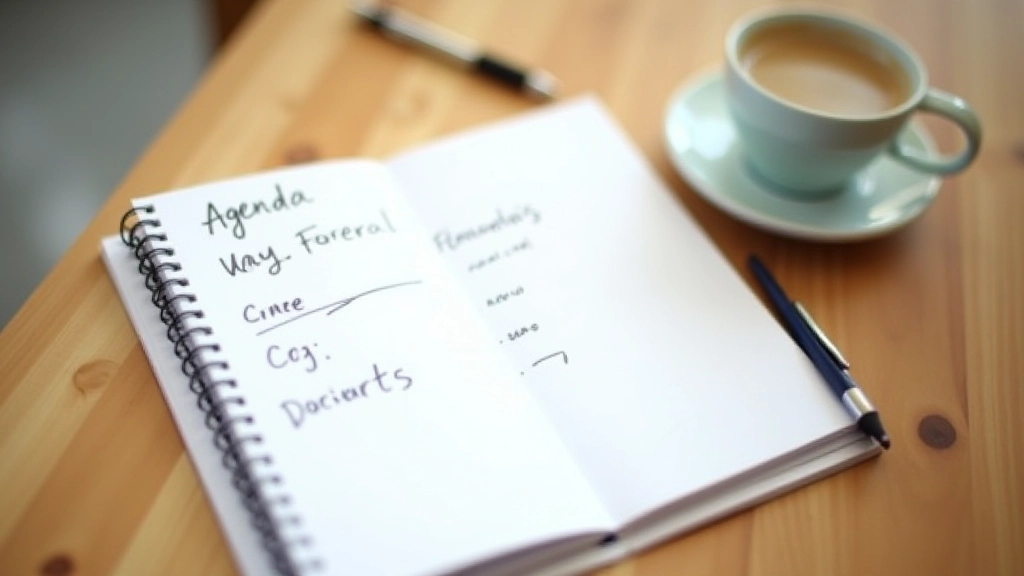

You’ve probably sat through a meeting where the agenda was just a vague list of topics. No time limits. No priorities. No structure. And guess what? The meeting ran over, important discussions got cut short, and people left frustrated.
It doesn’t have to be this way. A well-structured agenda isn’t just a checklist — it’s a roadmap that keeps everyone focused and moves discussions forward efficiently. When you take 15 minutes to build a proper agenda, you save hours of wasted time later.
Here’s the thing: most people skip agenda planning altogether. They wing it. But if you’re running meetings with 5 people, 10 people, or a full team, structure matters. A lot.
of professionals say meetings prevent them from getting actual work done
average weekly time wasted in unproductive meetings per employee
A functional agenda has three parts. They’re simple, but they make a huge difference in how meetings actually run.
Quick objectives statement. What’s this meeting about? Why are people here? Two or three sentences max. No long preambles.
List each topic with time allocated. Not a vague list — actual minutes. “Project update (10 min)”, “Budget review (15 min)”. People respect time when it’s explicit.
Who’s doing what? By when? Write it down during the meeting, not after. People remember what they commit to in real-time.

This is where most agendas fall apart. People list topics but don’t assign time. So what happens? The first item takes 40 minutes, and by the time you’re halfway through, you’re out of time.
Time allocation forces priority thinking. If you’ve got an hour meeting and eight topics, you can’t spend 30 minutes on one thing. You have to decide what actually matters.
Pro tip:
Add 5-10% buffer time into your agenda. Not dead time — just breathing room. Discussions run over. Questions come up. Build in realistic padding so you’re not constantly rushing.
A beautiful agenda on a document is useless if nobody reads it. Here’s how you make sure people actually engage with it.
The agenda’s not a prison. It’s a framework. If something important comes up, you can adjust. But you’re starting from a structure, not chaos.

Disclaimer: This article provides informational guidance on meeting structure and agenda planning. Meeting dynamics vary based on organization type, team size, and industry context. The techniques described are educational recommendations based on common meeting management practices. Your organization’s specific needs may require different approaches. We encourage you to adapt these principles to fit your team’s unique situation.
You don’t need a complicated system. Start with your next meeting. Write three things: opening statement, time-allocated topics, and action items at the end. That’s it. See how it changes the meeting flow.
After a few meetings, your team will expect structure. They’ll come prepared. Discussions will stay focused. And you’ll reclaim hours of productivity every week. It’s a small change that compounds into real impact.